
How to Apply for NSFAS 2026 — Step by Step
NSFAS (National Student Financial Aid Scheme) is the South African government's main student funding programme. It covers tuition, accommodation, and living expenses for qualifying students at public universities and TVET colleges. Applying correctly and on time is crucial — this guide takes you through the process step by step.
Who Is Eligible for NSFAS?
- South African citizen
- Accepted or enrolled at a public university or TVET college
- Combined household income below R350,000/year (R600,000/year if a household member has a disability)
- Have not previously received a qualification at the same or higher level as what you are currently studying
- Meet NSFAS academic progression requirements (N+2 rule)
- SASSA beneficiaries' dependants may automatically qualify
What Does NSFAS Cover?
University students:
- Full tuition fees (paid directly to the institution)
- Accommodation (at institution or approved off-campus residence)
- Transport allowance
- Learning materials allowance
- Personal care allowance
TVET college students:
- Registration and tuition fees
- Transport allowance
- Accommodation allowance
2026 Application Opening and Closing Dates
NSFAS applications for the 2026 academic year typically opened in September 2025 and closed in November 2025. Late applications may be considered but are not guaranteed funding.
If you are reading this now: Check nsfas.org.za immediately for the current application status. For the 2027 academic year, applications typically open in September 2026.
Step-by-Step: How to Apply for NSFAS Online
- Go to my.nsfas.org.za and click “myNSFAS”
- Click “Register” and create an account with your South African ID number, mobile number, and email address
- Verify your account via the OTP sent to your phone
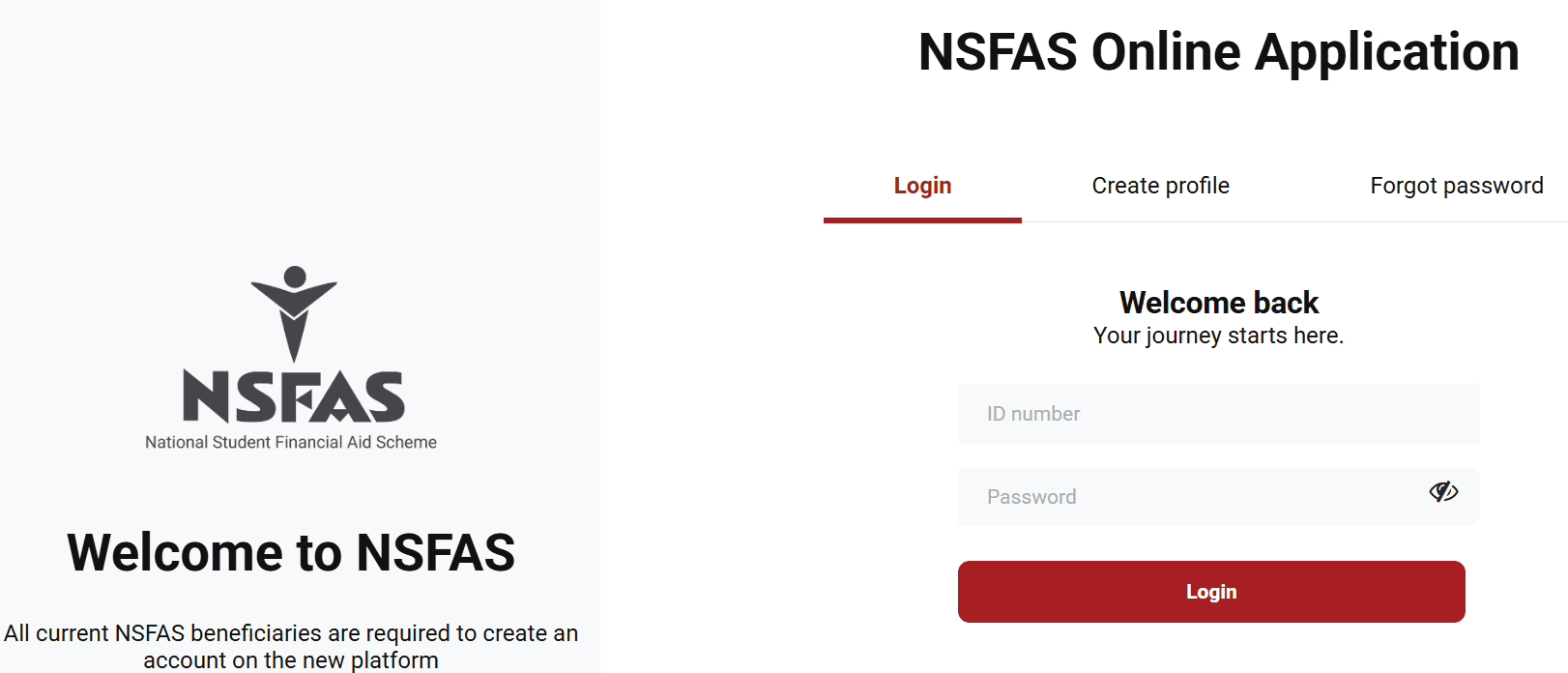
- Log in and click “Apply”
- Complete your personal details
- Enter your household income details (parent/guardian income)
- Upload all required supporting documents (see list below)
- Review your application carefully before submitting
- Click “Submit” — you will receive a reference number
- Track your status on myNSFAS — see our NSFAS Status Check guide
Documents Required for NSFAS Application
- Your South African ID (certified copy)
- Your matric certificate or latest academic results (certified copy)
- Parents' or guardians' South African IDs (certified copies)
- Proof of parents'/guardians' income:
- If employed: latest 3 months' payslips and most recent SARS assessment
- If self-employed: SARS assessment and 3 months' bank statements
- If unemployed: SASSA grant letter, or sworn affidavit of unemployment
- If a parent is deceased: death certificate
- Proof of registration or acceptance letter from your institution (if available)
- SASSA grant approval letter (if applicable)
How to Get Documents Certified
Documents must be certified by a commissioner of oaths — this is free at:
- Any police station
- Post offices
- Magistrate's court
- Many banks also certify documents
NSFAS for Orphans and Vulnerable Children
If both parents are deceased, apply as an orphan. Provide death certificates for both parents. If you receive a foster child grant or are under state care, you may automatically qualify for NSFAS.
After You Apply — What Happens Next
- NSFAS verifies your identity and income against SARS, SASSA, and Home Affairs databases
- Your application status updates on myNSFAS — check regularly
- If outstanding documents are required, upload them immediately
- If approved, your institution is notified and funds are disbursed
- Allowances are paid to you via NSFAS Wallet or your bank account